Jetzt kostenlose Tipps & Gratis-eBook sichern
Melden Sie sich für unseren Newsletter an und erhalten Sie regelmäßig sofort umsetzbare, wissenschaftlich fundierte Impulse für Ihre Lehre – plus unser Gratis-eBook direkt zur Anmeldung.

As a faculty developer in higher education, I thought I was aware of most of the issues and questions surrounding AI in education, but UNESCO’s new paper about the topic still held some surprises for me. The paper, written by UNESCO Assistant Director-General for Education Stefania Giannini and published on July 3rd 2023, takes a thorough look at how humanity, and education systems in particular, are dealing with AI. Here’s a summary of the paper, along with my thoughts about what we instructors can actually do about all these issues.
The UNESCO paper highlights the ways in which AI worsens many issues that we’re already grappling with.
Monopoly. It’s not a good idea to only have one or two AI platforms hold a near-monopoly on our knowledge systems. Just as we humans are diverse, we need diversity in our knowledge systems.
Proprietary. AI tools are created by people operating within a system who want to make profit. We shouldn’t expect AI tool creators to regulate themselves – it’s a conflict of interest for them.
Digital inequality. PCs, Internet connectivity and smartphones, as well as the education needed to use them mindfully and safely, are not distributed equally. The more advanced our digital tools become, the worse digital inequality becomes – including in education.
Displacing humans. The more space technology takes up in our lives, the more human interaction is displaced. A flexible mix of online and offline interactions is good for education, but we should never forget the value of human interaction.
Influencing. Young people especially are susceptible to being influenced. A chatbot posing as a friend will probably have a much easier time influencing people, and in much more nuanced ways.
What’s in the box? Not even AI developers know exactly what it’s doing or what it’s capable of. AI is a much larger and darker black box than anything we’ve ever seen before.
We don’t know what’s coming. The AI revolution might make the previous digital revolutions look minor in comparison. If we are fundamentally unable to predict what is coming, then the usual paradigm of education – „we know what the world is like“ and „we prepare people to thrive in this known world“ – is broken.

Opportunity cost. For the first time ever, we have a potential new target group for education: machines. Every dollar we invest into optimizing AI tools is a dollar we didn’t invest in a human teacher or human school. Giannini reminds us that educating humans should remain the most important goal.
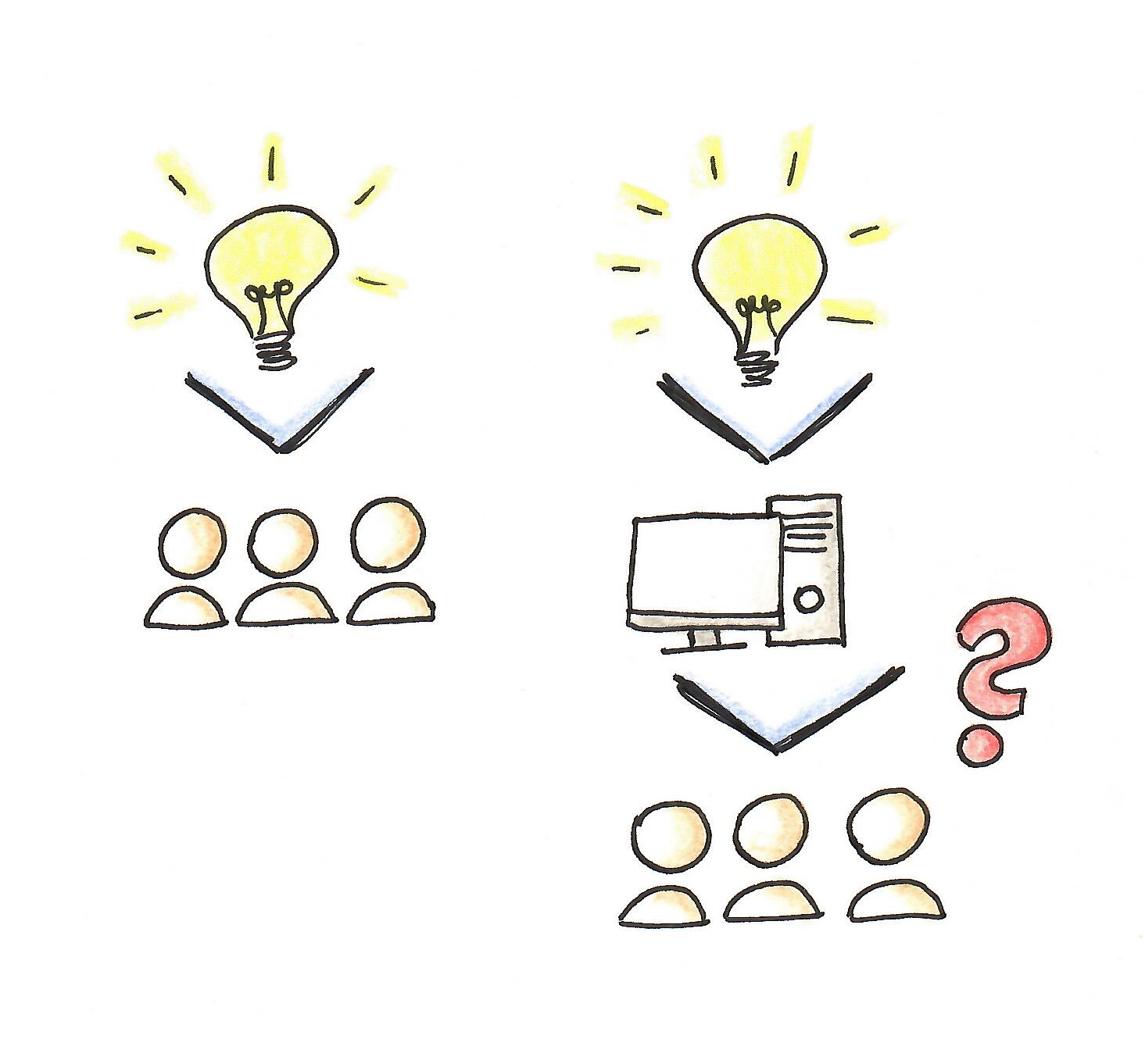
Slow it down. Giannini wants schools and universities to take responsibility for a slower pace, as corporations have a conflict of interest in slowing down their own product development.
Prioritize humans. „Education is – and should remain – a deeply human act rooted in social interaction.“ (Giannini, 2023, p. 7) Automation of education should not be seen as a fix for education inequality.
Vet AI for safety. UNESCO calls on schools and universities to vet AI for safety, just as textbooks are vetted. We also need more AI experts working for government.
Reflect. Giannini wants educators to use this moment to reflect – not how to teach using AI, but what teaching is for anyway.
Awareness and reflection. We should be aware of the big questions, sit with the uncertainty, stay informed but critical, and reflect on our values. Schwartz’s theory of basic values can help.
Self-care. Because being aware of large, unsolved issues is psychologically taxing, self-care is more important for instructors than ever: grounding practices, healthy escapism, and boundaries around teaching and news consumption.
Take a bit of action. Small steps can make a difference:
Discussions among us humans are still, I think we can all agree, a very meaningful endeavour.
Melden Sie sich für unseren Newsletter an und erhalten Sie regelmäßig sofort umsetzbare, wissenschaftlich fundierte Impulse für Ihre Lehre – plus unser Gratis-eBook direkt zur Anmeldung.
 Gratis bei Anmeldung zum Newsletter!